Wayfinding
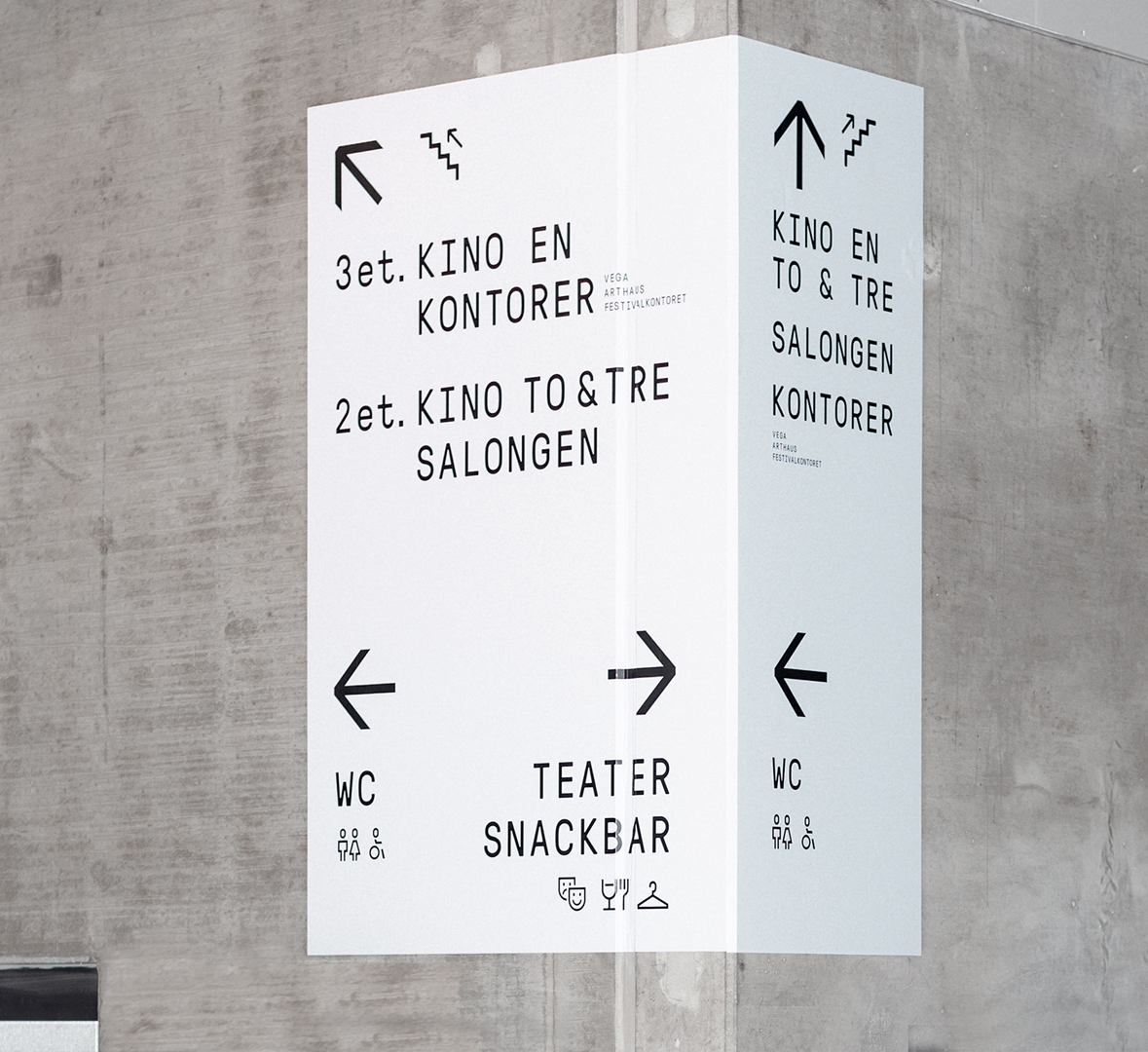
Wayfinding is not signage. It is how people find their way through a place, and signage is only one of the tools. We define what information a building needs, where decisions are made along a route, and where the architecture already answers the question without a sign. ↓
The best results come from starting early. In construction and property development, orientation is a spatial decision, not a purchase made at the end. When it is decided late, it becomes an installation job.
Strategy
The strategy sets what a visitor needs to know, and where. It fixes the names and terms the building uses, maps the points where people have to choose a direction, and decides what belongs on a sign and what belongs to the room. Everything after this depends on getting it right.
←
Sign family
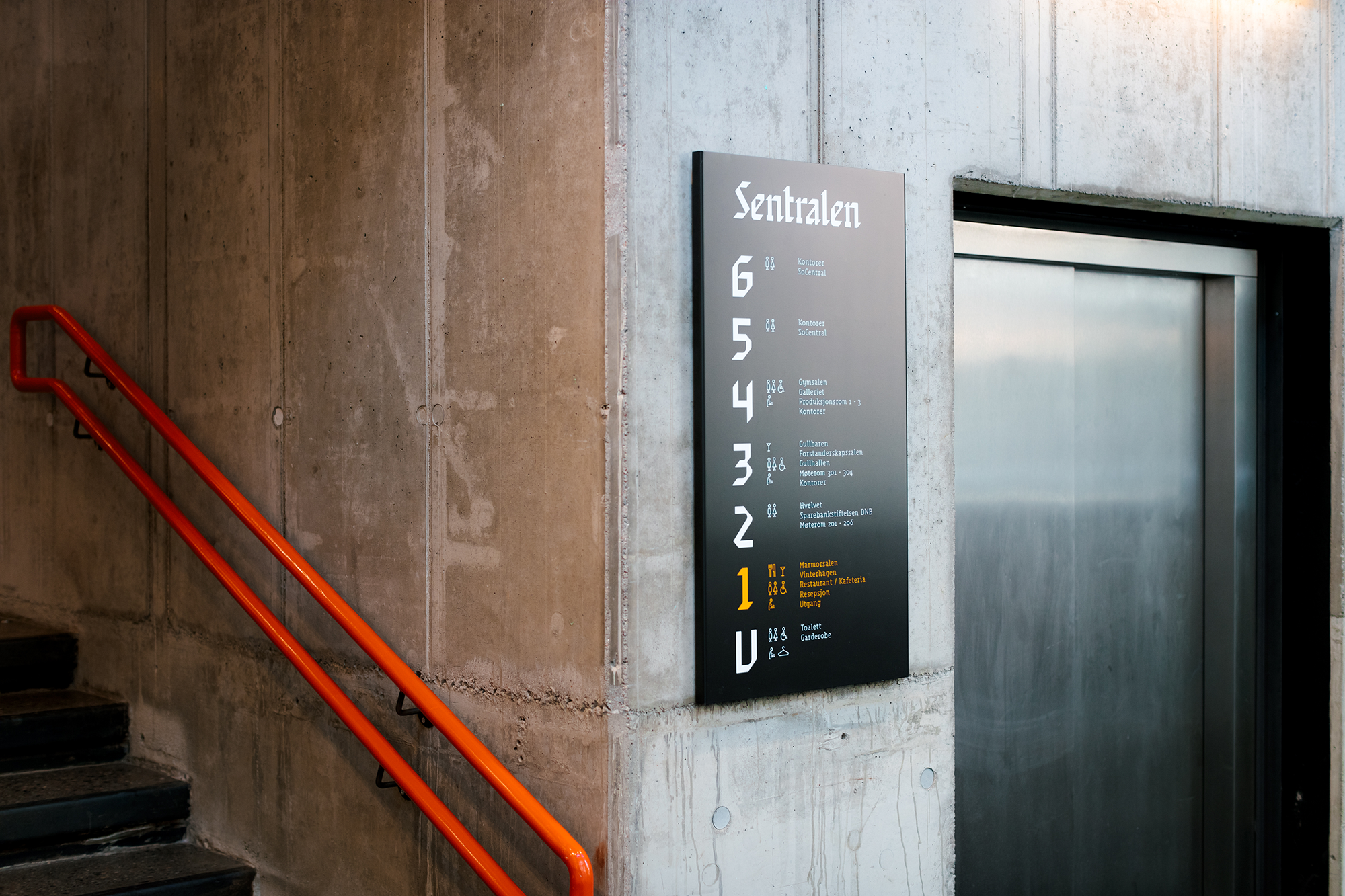
Too many signs are as much a failure as too few. The sign family defines each type, what it does and what it may contain, so the set covers every need in the building without competing with it. ↓

Design for surroundings
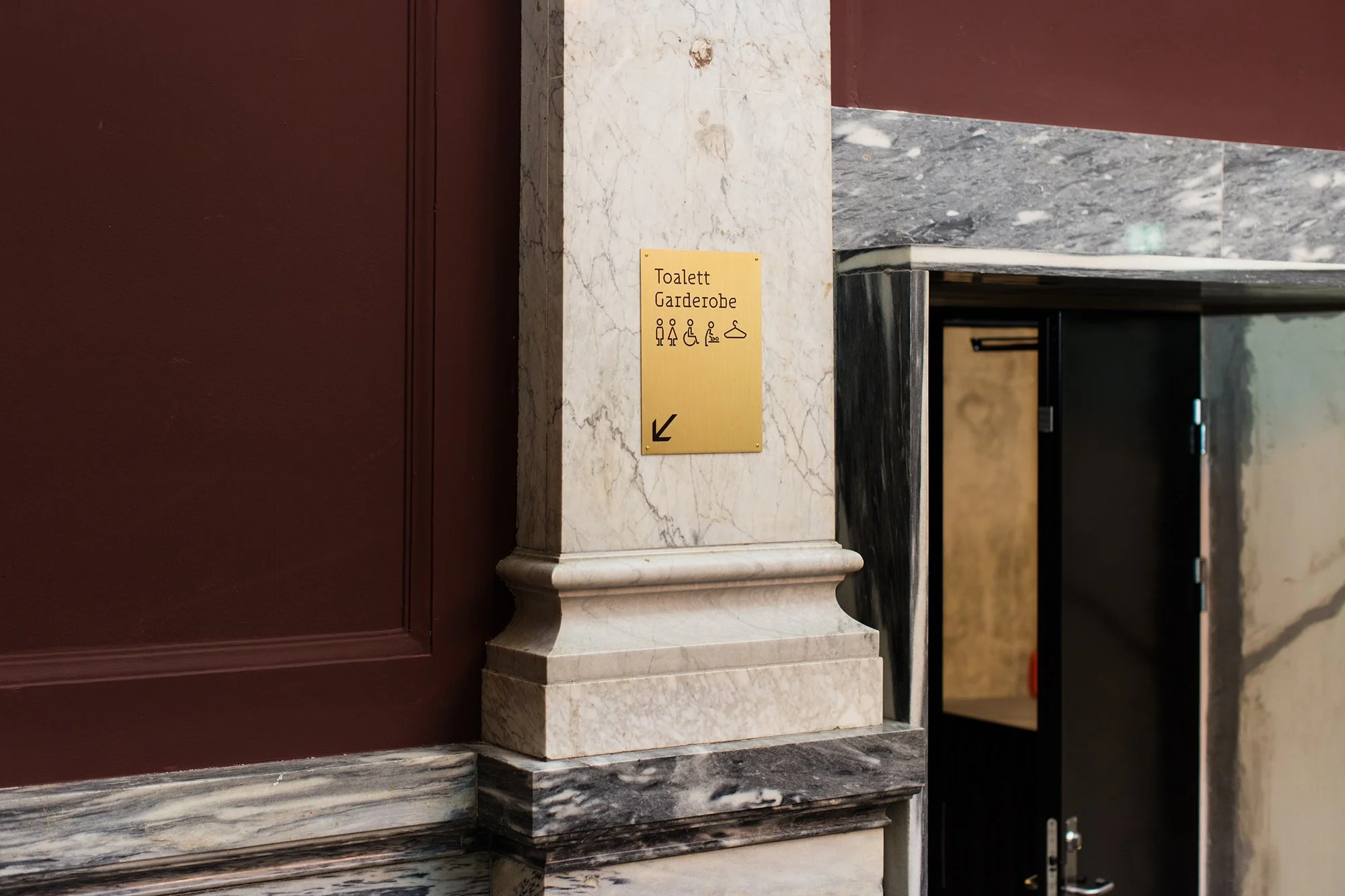
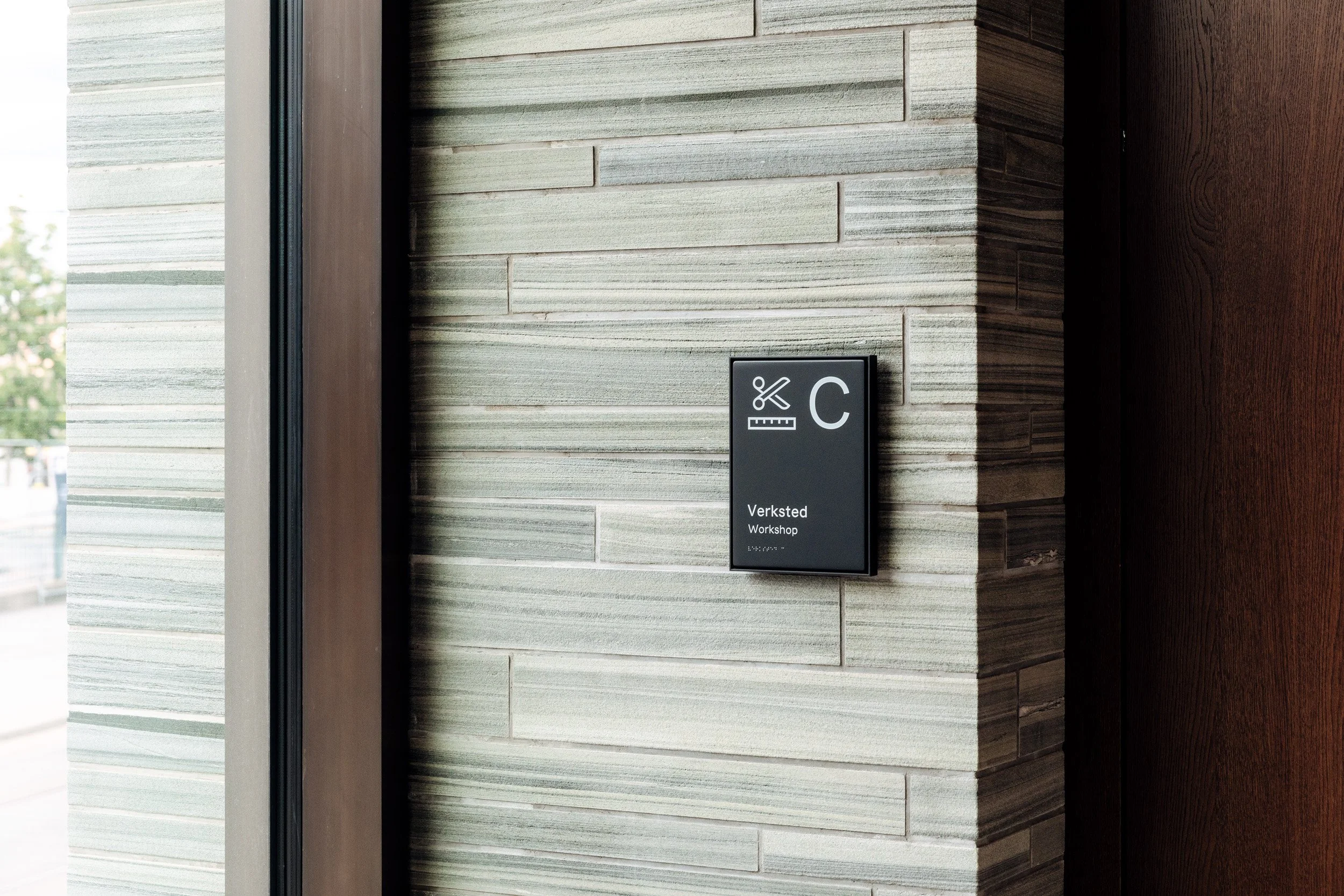
For optimal functionality and experience, the signage needs to be contextualized within its surroundings.

Universal Design
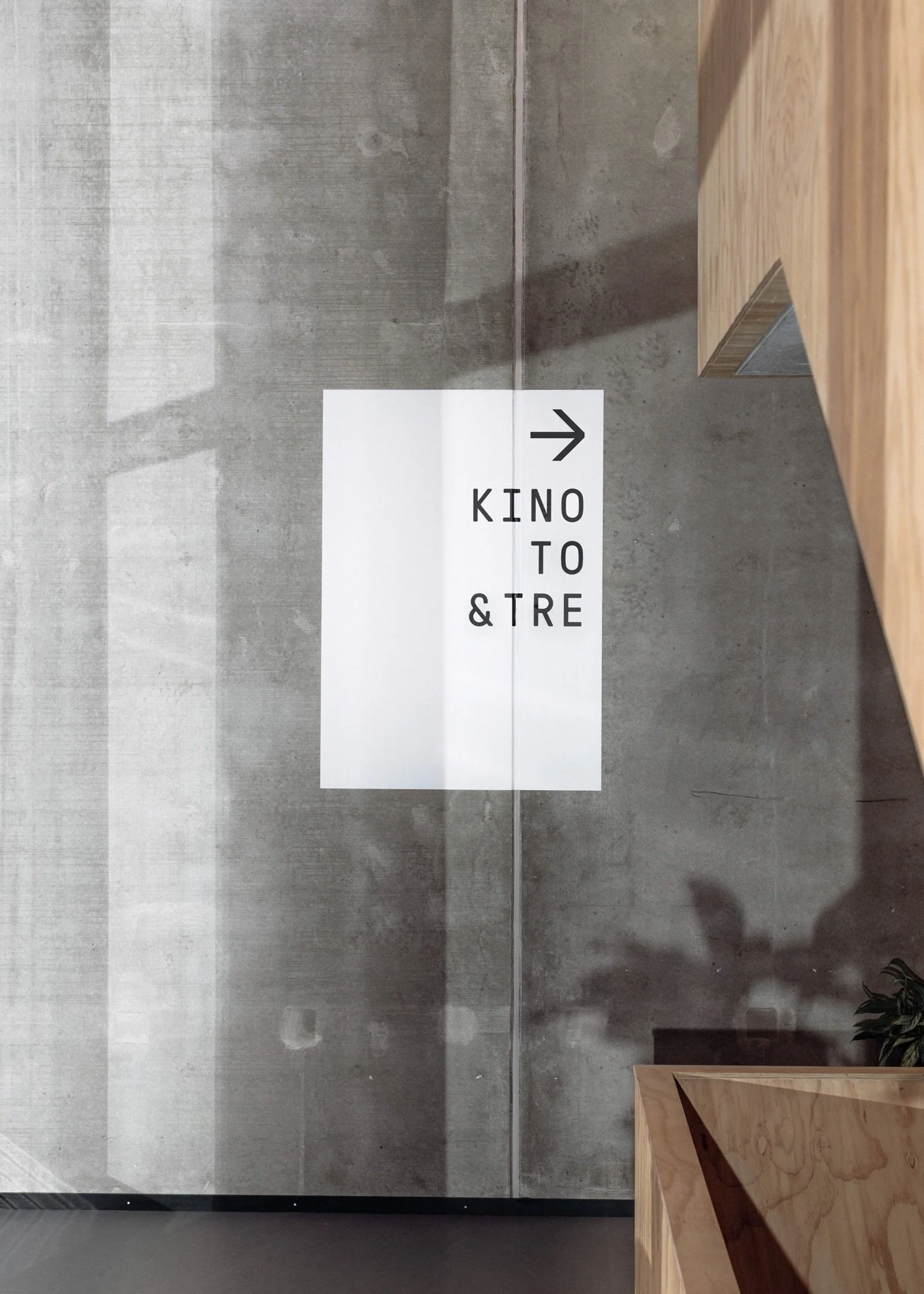
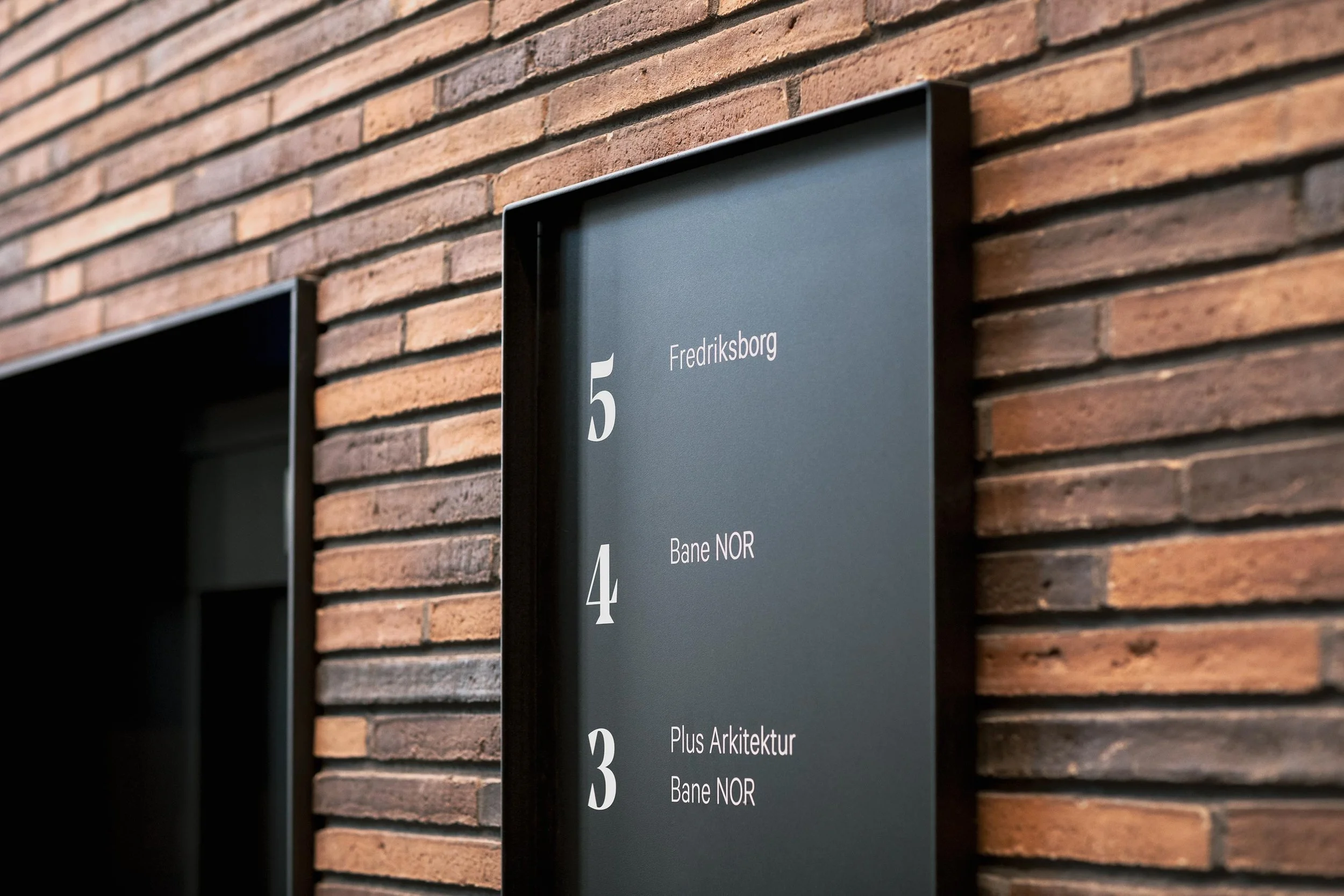
Legibility and function come first, for everyone. We work to the requirements in TEK17 on contrast, readability and tactile solutions, and treat them as a floor rather than a target. A building can meet the requirement and still be hard to read. ↓

The Grid
A grid keeps placement, composition and scale consistent across every format. It is what makes fifty signs read as one system, and what lets the building change content for twenty years without falling apart. ↓